Reverse Engineering
We measure, scan, and rebuild physical parts into CAD for prototypes, tooling, or production.
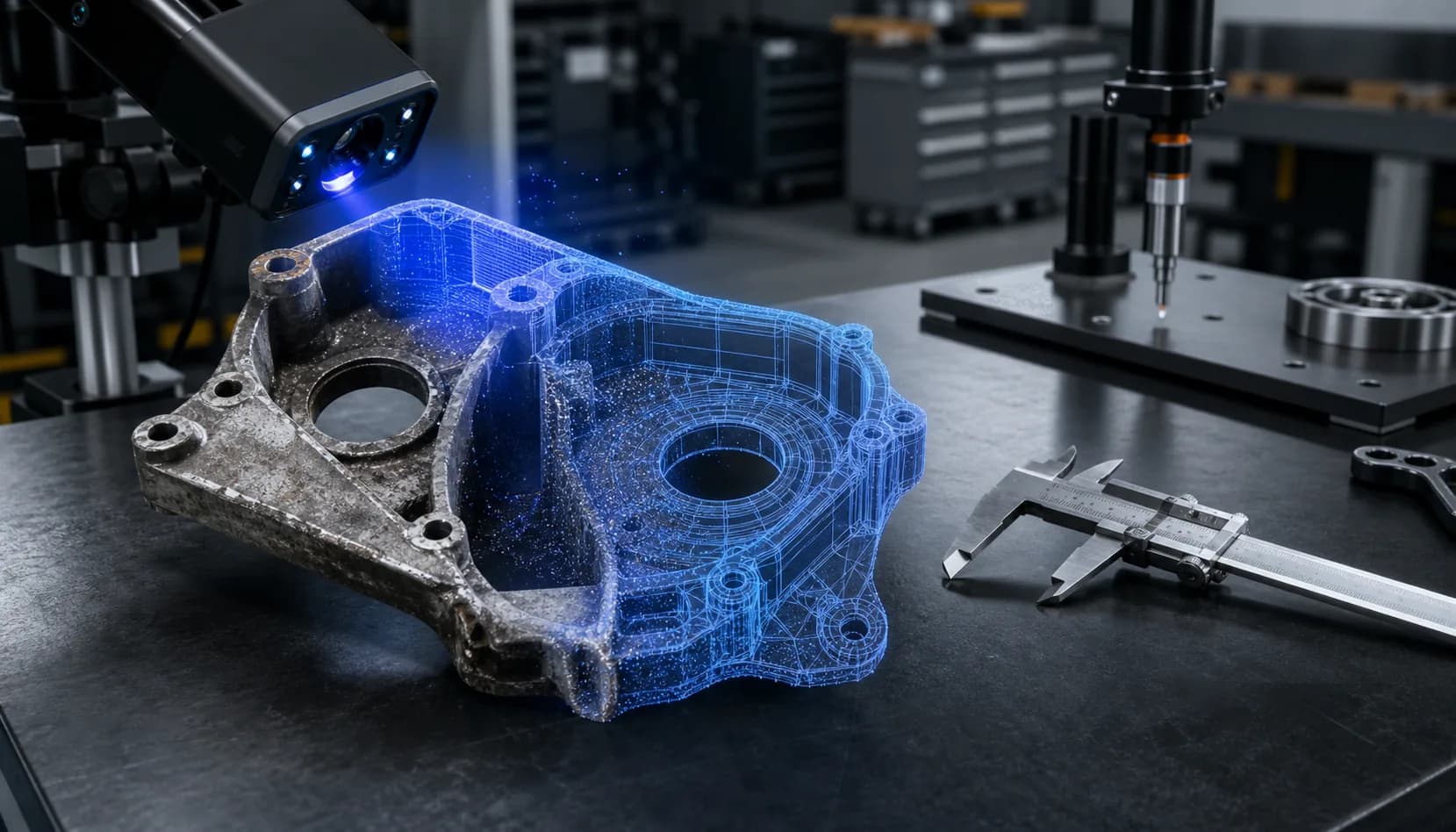
Evidence to CAD
Rebuild usable geometry from broken, unavailable, or undocumented parts.
Inputs we need
- Original part or fragment
- Photos and measurements
- CAD or drawings if available
Best fit
- A sample exists but production files do not
- Mounting or fitment geometry must be preserved
- The replacement can improve without changing the assembly
Deliverables
- Inspection notes and assumptions
- CAD-ready geometry or corrected model data
- Prototype or production route recommendation
Validation path
- Interface dimensions checked against the sample
- Prototype fit review when geometry risk is high
- Manufacturing method selected after material review
Risk notes
- Damaged samples may leave missing-surface assumptions
- Flexible parts may need fit validation
Examples
- Broken plastic cover
- Mounting bracket
- Interior trim component
Poor fit
- No sample, dimensions, photos, or installation context
- Certification is required outside the project scope
Related project paths
Services often paired with this
Evaluation intake
Ready to send the part evidence?
Submit photos, CAD, drawings, or notes. ARKAN reviews the likely route before pricing or production.