
Product Development

Custom bracket reverse engineered for improved fit

Example path from constraint to manufacturing route.

Method

CAD redesign / prototype validation

Route focus

Reverse Engineering, Additive Manufacturing

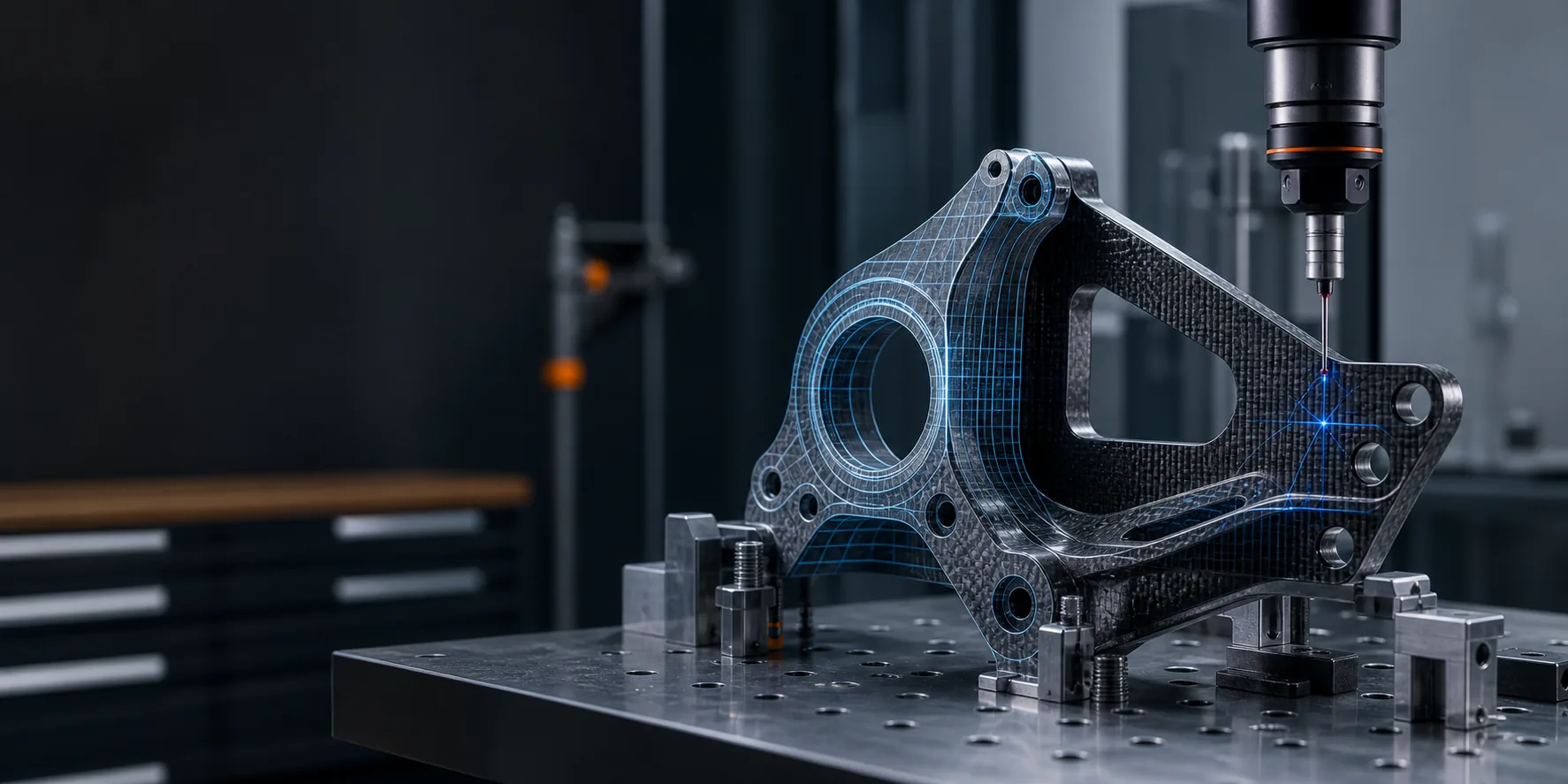
Engineered bracket under inspection with CAD measurement overlay

Proof summary

The work was reduced to evidence, route, validation, and repeatability.

A short view for buyers who need to know whether this type of constraint matches their own part problem.

Problem

01

The existing bracket needed stronger geometry and better alignment to the installed assembly.
Approach

02

The part was measured, redesigned around mounting points, and prototyped.

Validation

03

Mounting geometry checked first

Result

04

Improved geometry prepared for final material selection.

Inputs

  • Existing bracket
  • Installed assembly constraints
  • Strength and alignment goals

Constraints

  • Mounting alignment
  • Geometry improvement without changing the surrounding assembly
  • Prototype validation before final material selection

Why this method

CAD redesign corrected fit and strength around known interfaces.

Manufacturing method

CAD redesign / prototype validation

Validation path

  • Mounting geometry checked first
  • Prototype used to validate alignment
  • Material route kept open until geometry was proven

What made it hard

  • The surrounding assembly constrained the redesign
  • Strength and fit needed to improve together
  • A final material decision before validation would have increased risk
Part evaluation workbench with CAD model, drawings, calipers, and material samples

Evaluation intake

Better inputs create a faster technical response.

Evaluation intake

Ready to review a hard-to-source part?

Send photos, CAD, drawings, or notes. We review the route before pricing or production.

What to send

Photos

Clear views of the part, damaged areas, mounting points, and surrounding assembly.

Files

CAD, drawings, sketches, scans, PDFs, or prior production notes when available.

Dimensions

Critical measurements, fitment surfaces, tolerances, or known clearance limits.

Use context

Quantity, material goals, heat, load, vibration, wear, finish, and safety constraints.

Review style

Technical evaluation before pricing

Best inputs

Photos, broken part, CAD, drawings, quantity

Project types

One-off, prototype, small batch, repeat production